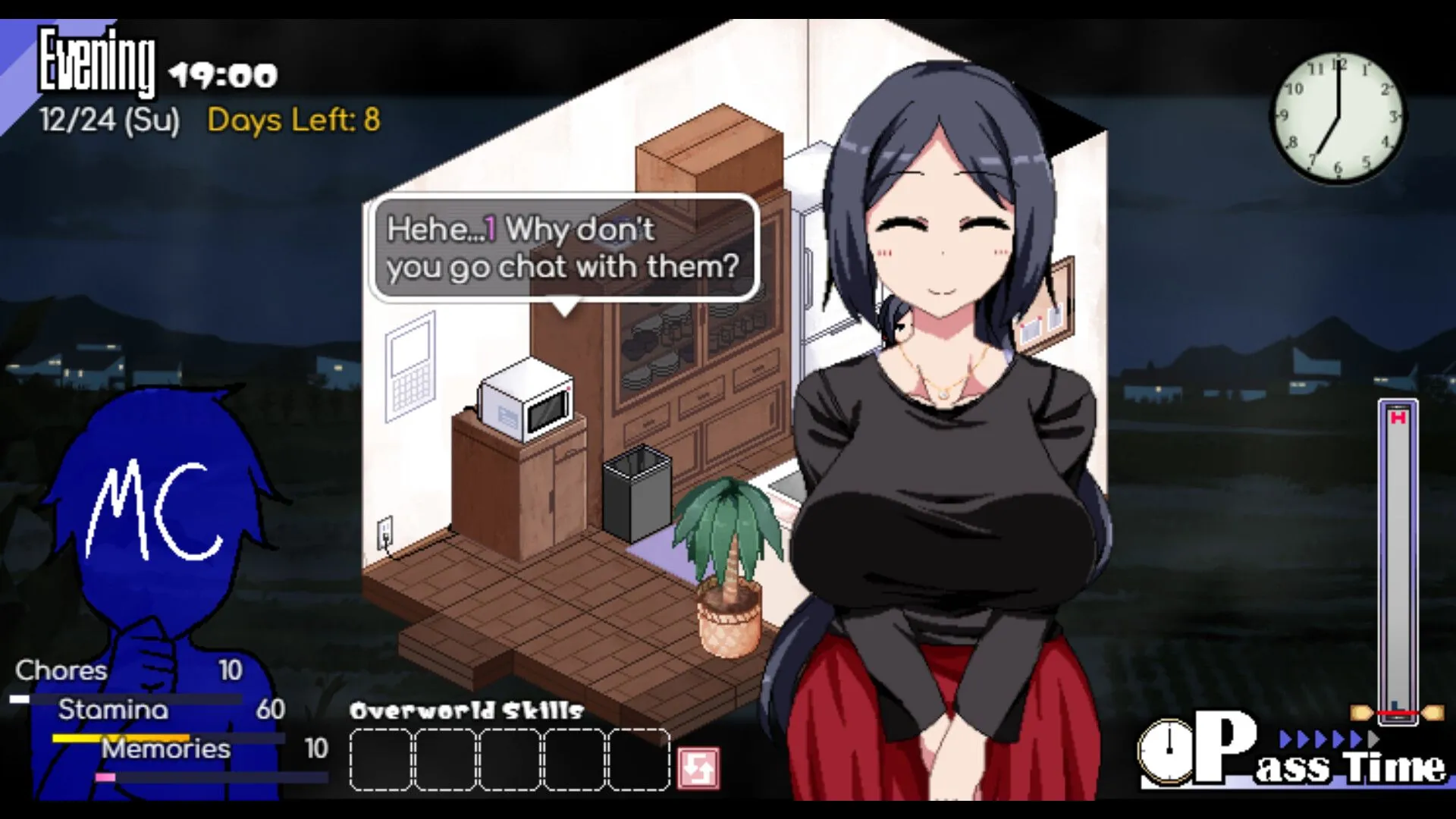
Play Welcome to Free Will
Welcome to Free Will Screenshots


















Welcome to Free Will review
Discover the Thrilling Choices and Secrets in This Interactive Adventure
Hey there, ever stumbled into a game that grabs you by the choices and doesn’t let go? Welcome to Free Will is that hidden gem—an interactive tale where your decisions shape a wild ride through temptation and consequence. I remember my first playthrough; I was hooked from the opening scene, heart racing as I navigated the protagonist’s dilemmas. This isn’t just any game; it’s a deep dive into freedom of choice in an adult-themed world packed with branching paths and steamy encounters. Whether you’re new or replaying for different endings, this guide breaks it all down with tips to maximize your experience. Let’s jump in and explore what makes Welcome to Free Will so addictive.
What Makes Welcome to Free Will a Must-Play?
It was one of those nights. You know the kind—scrolling through endless game stores, a little bored, a lot curious, and then bam. You stumble upon a title that just sounds different. For me, that was Welcome to Free Will. I clicked “play” just to see what the fuss was about, and before I knew it, the sun was coming up. I wasn’t just playing a game; I was living another life, making decisions that felt unnervingly real, and facing consequences that kept my heart pounding. That’s the magic trick this interactive adventure pulls off, and it’s exactly why I’m writing this guide. If you’re asking “what is Welcome to Free Will?”, strap in. You’re about to discover one of the most compelling narrative experiences out there. 🕹️✨
At its core, the Free Will game is a masterclass in psychological simulation. You step into the role of the player, but your avatar is a young man named Will. Your job? To guide him through a meticulously crafted digital reality where every choice, from the monumental to the mundane, ripples out to shape his relationships, his morality, and his very destiny. It’s a game that lives and breathes on its Welcome to Free Will choices, making you the author of a story that can unfold in dozens of wildly different ways. Forget linear plots; here, you are the architect of drama, romance, tension, and triumph.
How Does the Choice System Work in Welcome to Free Will?
The genius of Welcome to Free Will isn’t just that you have choices—it’s how those choices are weighted. This isn’t a simple “good vs. evil” slider. Every decision exists in a delicate ecosystem of character affinity, hidden variables, and long-term narrative arcs. Think of it as a narrative crossroads where each path is valid, but each leads to a distinct horizon.
The game presents you with scenarios, often intimate and always morally tinged, and gives you a short window to react. Will you be confident or cautious? Compassionate or self-serving? Truthful or manipulative? These moments are the lifeblood of the game. For instance, early on, you might be faced with a character in distress. Choosing the risky, immediate path of comfort could unlock a deeply intense scene and accelerate a relationship, but it might also close off a slower, more trusting storyline with another character. The safer, more diplomatic route keeps your options open but might mean missing a moment of raw, narrative gold.
These branches don’t just fork once; they cascade. A choice in Chapter 1 can quietly determine which characters you even meet in Chapter 3, or change the context of a conversation in Chapter 5. It’s a beautiful, sometimes terrifying, butterfly effect. To give you a taste of how your journey can immediately diverge, here’s a quick look at some early game pivots:
- The Midnight Message: When a character texts you late at night, do you reply with concern (unlocking a vulnerable, personal conversation) or joke it off (building a more casual, humorous dynamic)?
- The Office Confrontation: Witnessing a unfair situation, do you speak up publicly (gaining respect from some, making an enemy of another) or seek a private solution (playing a subtler, more political game)?
- The Personal Secret: A character shares a hidden fear. Do you share a vulnerability of your own (building profound mutual trust) or offer logical solutions (establishing yourself as a stable, but less emotionally open, rock)?
- The Tempting Offer: Presented with an opportunity for a quick, morally grey advantage, do you take the shortcut (leading to immediate rewards but future complications) or stick to your principles (a harder road now, with potential for greater respect later)?
- The Past Comes Calling: How do you handle a reminder of Will’s old life? Embrace the nostalgia (potentially rekindling old flames or habits) or focus on the present (signaling a firm desire to move forward)?
This system is the direct answer to how to play Welcome to Free Will. You don’t play to “win”; you play to explore. You play to see just how deep the rabbit hole goes for each of the fascinating Free Will characters.
Key Story Elements and Character Backstories
So, who are you guiding through this maze of consequences? Will is a brilliantly crafted protagonist—he’s not a blank slate. He comes with his own history, insecurities, and desires, but his reactions are yours to command. He’s conflicted, yearning for connection but often skeptical, making him the perfect vessel for your own curious exploration. His journey is the canvas, but the colors come from the incredible cast around him.
The Free Will characters are where the game’s writing truly shines. They are not mere romance options or plot devices; they are fully realized individuals with their own goals, traumas, and agencies. Your choices determine how much of their true selves they reveal to Will. Building affinity isn’t just about picking the “nice” option; it’s about choosing the option that resonates with who they are.
Let’s meet a few key figures (no spoilers, I promise!):
| Character | Initial Persona | Backstory Glimpse & Affinity Key |
|---|---|---|
| Elena | The confident, ambitious colleague. | Her driven exterior masks a relentless pressure to prove herself. High affinity reveals the personal sacrifices behind her success. She respects directness and competence over empty flattery. |
| Maya | The creative, free-spirited artist. | Her whimsical nature is a deliberate choice following a structured, restrictive past. Connecting with her requires embracing spontaneity and showing emotional honesty, not logic. |
| Cassandra | The mysterious and seemingly aloof neighbor. | Her distance is a shield of self-reliance built from past betrayal. Gaining her trust is a slow burn, requiring consistently respectful boundaries and proving your reliability through actions, not words. |
These backstories don’t just play out in cutscenes. They influence every interaction. A joke that lands perfectly with Maya might offend Cassandra. A strategic insight will impress Elena but do little to connect with Maya on a deeper level. Learning these nuances is a huge part of the game’s addictive pull. You’re not just reading a story; you’re learning about people. 🎭
Why Players Keep Coming Back for More
This brings us to the million-dollar question: what’s the secret sauce? Why do players sink dozens of hours into Welcome to Free Will, chasing every last secret? It boils down to three things: depth, discovery, and consequence.
First, the psychological depth is staggering. The game holds up a mirror to your own decision-making processes. That slight pang of guilt after choosing the selfish option? The nervous excitement before a risky romantic advance? The game is engineered to evoke real emotion, making you reflect on your own values. It’s a safe space to ask, “What would I really do?”
Second, the sheer volume of Welcome to Free Will endings is a siren call for completionists and story-lovers alike. We’re not talking about a “good, bad, and neutral” ending. We’re talking about endings tailored to your relationship with each major character, the moral compass you’ve forged for Will, and the specific secrets you’ve uncovered or buried. Did you help someone overcome their past, or did you become a part of their problem? The finale will reflect that. I remember one playthrough where a single, seemingly small choice—opening up about a fear instead of hiding it—completely flipped a character’s trajectory in the final act. It felt like I had discovered a whole new game hidden within the game. 🔄
Third, the practical design encourages experimentation. The robust save system is your best friend.
Pro Tip: Create a new save file at the start of each major chapter. This lets you branch off and explore those “what if” moments without replaying hours of content. It’s the best way to experience the game’s vast narrative scope without spoiling the surprise of your first, blind playthrough.
The desire to unlock every poignant scene, every hidden confession, and every possible outcome is powerful. The game rewards you for this curiosity with achievement unlocks and, more importantly, with a fuller understanding of its world and its people. You’ll keep coming back because each time, you’ll uncover a new layer, a new perspective, a new truth about the Free Will game.
So, for the newcomer, my ultimate piece of actionable advice is this: Embrace the role. Don’t try to game the system on your first run. Play as you genuinely feel in the moment. Let Will be an extension of your curiosity. Save often, and don’t be afraid to revisit a moment to see where the other path leads. The true joy of Welcome to Free Will isn’t in finding the “best” ending; it’s in appreciating the profound beauty and complexity of all the endings you can create. Your story is waiting to be written. ✍️
Frequently Asked Questions
Q: Is the Free Will game free to play?
A: The base experience of Welcome to Free Will is typically a one-time purchase. The developers are known for substantial free content updates that expand the story and characters, but the core game is a complete, premium narrative experience.
Q: How long does it take to see all the Welcome to Free Will endings?
A: This is a big part of the appeal! A single, focused playthrough might take 8-12 hours. However, to experience the vast majority of story branches and see multiple Welcome to Free Will endings, you can easily spend 40-50 hours or more. It’s a game designed for multiple revisits.
Q: I’m overwhelmed by the choices! Any simple how to play Welcome to Free Will starter tip?
A: Absolutely! On your very first playthrough, I recommend aiming for “neutral” or “honest” responses when you’re unsure. This tends to keep the most story paths open initially, allowing you to map the narrative tree before making more extreme choices on subsequent runs. And remember: use that save feature liberally!
There you have it—your roadmap to conquering Welcome to Free Will, from first choices to those mind-blowing endings. I dove deep into this game during a rainy weekend, and it reshaped how I think about interactive stories. The real magic? Every path feels personal, packed with thrills and twists that keep you replaying. Whether you’re chasing romance, chaos, or completion, these tips will get you there smoother. Grab the game, experiment boldly, and share your wildest runs in the comments below. What’s your favorite ending so far? Dive in and make your mark on Free Will today!